
Tags
books, Interviewing a king, Jesus Christ millennial kingdom, King David, psalm 23, rapture, seun akisanmi
The year is 87 ACR (After Christ’s Return). It has been a glorious experience finally witnessing Jesus and the raptured followers return to set up a kingdom that will be unlike any government a nation has experienced on earth.
It had been a strong desire of my heart to have a one-on-one conversation with King David. I was instructed by his personal assistant that I only had 40 minutes with him because he was scheduled to appear in a meeting with Jesus later in the day at the Eternal Council Hall situated in East Jerusalem.
I didn’t want to waste much time. I was nervous. I had prepared 15 questions to ask one of the most prolific authors in history.
As the sun cast its golden hues over East Jerusalem, the air was thick with anticipation. I found myself standing before the towering gates of the Eternal Council Hall, a structure of divine grandeur that seemed to blend the ancient with the celestial. The Hall’s intricate arches and radiant spires were a testament to a kingdom like no other, where the mundane and the miraculous coexisted harmoniously.
With each step towards the entrance, my heart raced with a mix of reverence and excitement. The experience of witnessing Jesus and His followers return to establish this unparalleled kingdom had already been transformative, but this moment—meeting the legendary King David himself—was one of the pinnacle of my journey. The sheer weight of history and divine presence hung in the air as I was ushered into the Hall by an entourage of 10 men.
Inside, the atmosphere was serene yet electrifying. The Hall’s interior was resplendent with an ethereal light that seemed to emanate from the very walls, casting a tranquil glow over everything it touched. I was led to a comfortable, ornate chair in a room that perfectly blended royal elegance with divine grace. The furnishings were imbued with an aura of timelessness, each piece a wood+metal+glass masterpiece of craftsmanship that spoke of a kingdom where beauty and purpose intertwined seamlessly, with emphasis on the word seamlessly.
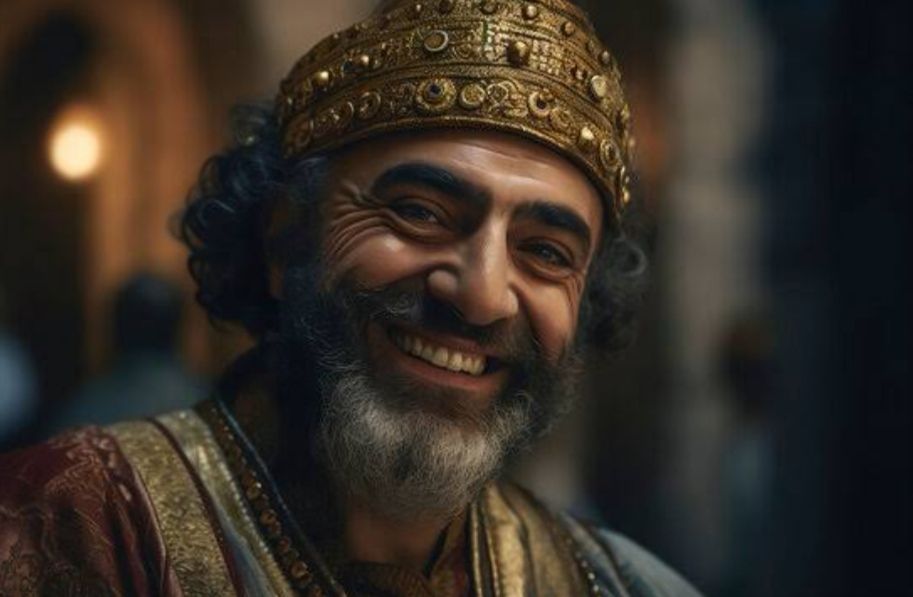
King David, as I had always imagined, entered with a dignified grace without any entourage. His presence was both commanding and reassuring, a living embodiment of the wisdom and strength that had defined his reign thousands of years earlier on earth. With the clock ticking and only 40 minutes allotted, I knew every moment was precious. The personal assistant’s reminder to be punctual was a stark but respectful nudge toward the urgency of the upcoming dialogue.
As I gathered my thoughts, ready to embark on a conversation with one of history’s most significant figures, I felt a profound sense of gratitude. The opportunity to delve into the mind of a King, against the backdrop of such a magnificent setting, was nothing short of a divine privilege, one that I had prayed for a century earlier.
King David: [Smiling warmly and extending his arms] “Ah, finally, you’ve arrived! I was beginning to think you might have been swallowed by a giant fish or something.”
Seun: [Laughing] “I’m relieved you think so highly of my stamina. It’s an honor to meet you again my king.”
King David: [Giving a friendly, firm hug] “The pleasure is mine. You know, I’ve read all 187 of your books, and let me tell you, they’ve kept me quite entertained and inspired! I especially loved how you narrated your epic journey from 4 American prisons to the photography industry. That book was emotional and it brought to mind the emotions I had while dealing with being a parent in my early days. Anyways, who knew modern authors had so much to say in a creative and emotional way?”
Seun: [Surprised and amused] “I’m flattered! I wasn’t expecting you to have such a thorough reading list especially considering your super busy schedule.”
King David:[Chuckling] “Oh, I’m always on the lookout for wisdom, even if it comes from centuries ahead. Your writing is quite something—though I must admit, I’m a bit jealous of your literary prowess. I had to make do with a harp and a few psalms in my days. It would be a privilege for us to author a book together. I think it’s something the world would be eager to read.”
Seun: [Smiling] “Wow. I’m so honored. It will will be a privilege indeed. I guess we both had our creative outlets and will show more of it in the collaborative book with the new insights we’ve gotten in recent decades. I’m eager to dive into the interview if you don’t mind as time is fast going. Any last-minute advice for a nervous soul like mine before we get started?”
King David: [Leaning in conspiratorially] “Just remember to ask the tough questions, but keep your sense of humor. After all, a little laughter goes a long way, even in the Eternal Council Hall.”
Seun: [Nodding] “Got it. I’ll keep that in mind. Thank you for the warm welcome and for taking the time to read all my books!”
King David: [Grinning] “Anytime! Now, let’s make this interview as memorable as one of my epic tales. Onward to conference room 2!”
As we both headed toward one of the conference rooms in the Eternal Council Hall, the air was filled with a sense of anticipation and comfort, setting the stage for what promises to be an unforgettable conversation.
Seun: “What was the source of your strength and confidence when facing overwhelming challenges, such as Goliath or leading Israel in times of conflict?”
King David: “Ah, you want to know how a young shepherd boy took down a giant with just a slingshot? Let me tell you, it wasn’t just a matter of bravado. It was a combination of youthful arrogance, divine intervention, and a good dose of “What have I got to lose?” I’d say having a bit of divine backup helps, but if you’re looking for practical advice, maybe don’t challenge giants unless you’re sure you’ve got the right stones… and a bit of heavenly support.”
Seun: “How did you manage the complexities of leadership and the moral dilemmas you faced, especially regarding your actions with Bathsheba and Uriah?”
King David: “Oh, the Bathsheba episode. You know, hindsight is 20/20. The moral of that story is: don’t mix business with pleasure, and definitely don’t send your loyal friend to the front lines to cover up your own missteps. Leading a nation is a bit like trying to herd cats—everyone’s got their own agenda, and sometimes you make a mess of things. The key is owning up to your mistakes, repenting, and hoping your subjects are a bit forgiving.”
Seun: “Can you describe your relationship with God and how it influenced your decisions and actions throughout your life?”
King David: “God and I had a rather close relationship—some might say I was His favorite. He was my constant companion and advisor, though I sometimes wished He’d given me a heads-up about certain pitfalls. Still, I trusted Him, and His guidance kept me from going completely off the rails. My secret? Listen to divine advice, but don’t forget to ask for it before you make a royal mess.”
Seun: “What were the most important lessons you learned from your time as a shepherd, a warrior, and a king that you would want to pass on to future generations?”
King David: “Lesson one: Shepherding teaches patience. If you can manage a flock of sheep, you can manage a kingdom. Lesson two: Fighting giants is all about knowing your strengths and weaknesses. Lesson three: Being a king is about juggling—juggling people, politics, and problems. And remember, every once in a while, stop to thank your Creator for giving you the strength to deal with it all without completely losing your sanity.”
Seun: “How did you handle the personal and political betrayals you encountered, such as the rebellion of Absalom, and what advice would you give to someone dealing with betrayal and conflict in their own life?”
King David: “Ah, Absalom. Betrayal from within the family—a real heartbreaker. How did I handle it? Well, I had to wear my “tough king” face, but inside, it was a mess. My advice? Don’t let betrayal turn you bitter. It’s like trying to run a kingdom with a thorn in your side; it hurts, but you keep going. Forgive where you can, learn from the experience, and don’t let it make you paranoid. Trust is a tricky thing, but you can’t rule an empire if you’re constantly second-guessing everyone around you.”
Seun: “If you had access to today’s technology, how do you think it would have changed your approach to governance and military strategy?”
King David: “Imagine having a few chariots equipped with GPS and satellite intel. Or imagine me using an army of AI robots instead of having to sacrifice the lives of my people in the army. I might have had fewer surprise attacks and a more efficient kingdom. On the other hand, I’d probably be tempted to send some very royal tweets. But seriously, technology could have made everything from communication to warfare a lot more streamlined.
Seun: “What advice would you give to modern parents about raising children, especially when it comes to preparing them for leadership or facing personal challenges?”
King David: “Ah, parenting—one of the few things I’m still learning about. If I could offer some advice, it’d be to guide your children with wisdom, lead by example, and remember that even royal children are just people. Encourage them to be resilient and to seek wisdom from their own experiences. And maybe avoid the whole “send them to fight a giant” method of preparing them for life.”
Seun: “Given your experience with leadership and resources, what strategies would you recommend for addressing poverty and ensuring the well-being of the less fortunate in society?”
King David: “Well, my approach back then was mostly about trying to be fair and just, but it’s clear that a proactive approach works best. Distribute resources wisely, ensure that justice and fairness guide your policies, and invest in infrastructure and education. And if you can’t solve all the problems, at least make sure you’re not making them worse.”
Seun: “How did you navigate political alliances and rivalries in your time, and what advice would you have given to contemporary leaders of the 21st century about managing political conflicts and building strong alliances?”
King David: “Politics is as old as kings and kingdoms. My advice? Build alliances through genuine respect and mutual benefit, and always be aware of shifting loyalties. Keeping your friends close and your potential rivals closer might just keep you in the throne a bit longer. And remember, a little bit of diplomacy goes a long way in smoothing over conflicts.”
Seun: “Please bear with me, my Lord, I’m almost done with my line of questions. How do you wish to be remembered, and what do you think is the most important aspect of your legacy that you hope will endure through the ages?”
King David: “Ah, the eternal question of legacy. I’d hope to be remembered as a king who sought after God’s heart and led with courage and justice. The Psalms I wrote and the ways I tried to shepherd my people would be my true legacy. And maybe that I knew how to dance—sometimes with great enthusiasm and abandon!”
Seun: “What is the most difficult decision you ever had to make, and how did you arrive at the right choice despite the challenges and advice from others?”
King David: “Oh, decisions—there were plenty of those, like choosing between loyalty and political necessity. The most challenging decisions came when I had to balance personal feelings with what was best for the kingdom. My advice? Seek wisdom earnestly, consider all counsel, and remember that even kings can’t see all ends.”
Seun: “What were the biggest personal challenges you faced, and how did they contribute to your growth as a leader and as a person?”
King David: “I faced personal challenges like falling into sin, dealing with betrayal (especially within my family), and managing a diverse and often unruly kingdom. Each of these trials taught me humility, the importance of repentance, and the need for grace—both for myself and for others.”
Seun: “How did you discern the will of God in your decisions, and what would you advise someone today who is seeking divine guidance in their life?”
King David: “Discerning divine will was a matter of prayer, seeking counsel, and sometimes waiting for clear signs. My advice? Build a strong relationship with God through prayer and listening, and be patient for His guidance. Sometimes, it’s about paying attention to the quiet nudges rather than the loud proclamations.”
Seun: “Here’s my last question for the day. What was your personal philosophy of leadership, and how did you apply it in both times of peace and in times of conflict?”
King David: “Leadership is about balancing vision with action, compassion with firmness. I tried to lead by example, showing that even a king should serve his people and seek justice. In times of peace, it was about nurturing and building; in conflict, it was about guiding and protecting.”
As the interview concluded, King David and I were guided to a beautifully set table between conference room 2 and 3, prepared with meticulous care. The table was adorned with an array of vibrant dishes and drinks, each more inviting than the last. In the center, a large bowl of Zobo—a rich, crimson drink made from hibiscus flowers—stood out, its deep color reflecting the warm light of the Hall. I wonder how they knew this was my favorite drink.
King David: [With a twinkle in his eye] “Ah, it seems we have a feast awaiting us. It reminds me a bit of what I wrote in one of my songs —’He prepares a table before me.’ Though, I must say, this table seems a bit more… festive than the ones I was accustomed to back then.”
Seun: [Smiling from ear to ear like a cartoon character] “It does seem like quite a spread, doesn’t it? I guess we’re not just talking about a metaphorical table here. And the Zobo—such a delightful and refreshing choice. I can see how you might find it a bit different from the bread and wine of your earlier days on earth.”
King David:[Chuckling] “Indeed, this is a splendid feast. Though I must admit, if I’d had Zobo back then, I might have written a few more psalms about its virtues. This spread feels like a royal banquet, perfectly prepared, just as the Psalm promised.”
As we took our seats, the sense of camaraderie lingered. The table was more than just a meal; it was a symbol of the gracious and abundant provision that King David had alluded to in his timeless words. The food and drink served as a fitting conclusion to our conversation, blending the richness of history with the warmth of fellowship.As
We dined for what seemed like 20 minutes, I couldn’t help but get lost in thoughts regarding the book that King David had suggested we jointly write. What will the book be about? I wondered.
#seunakisanmi
#iWRITEiSPEAKiINSPIRE
 Seun Akisanmi